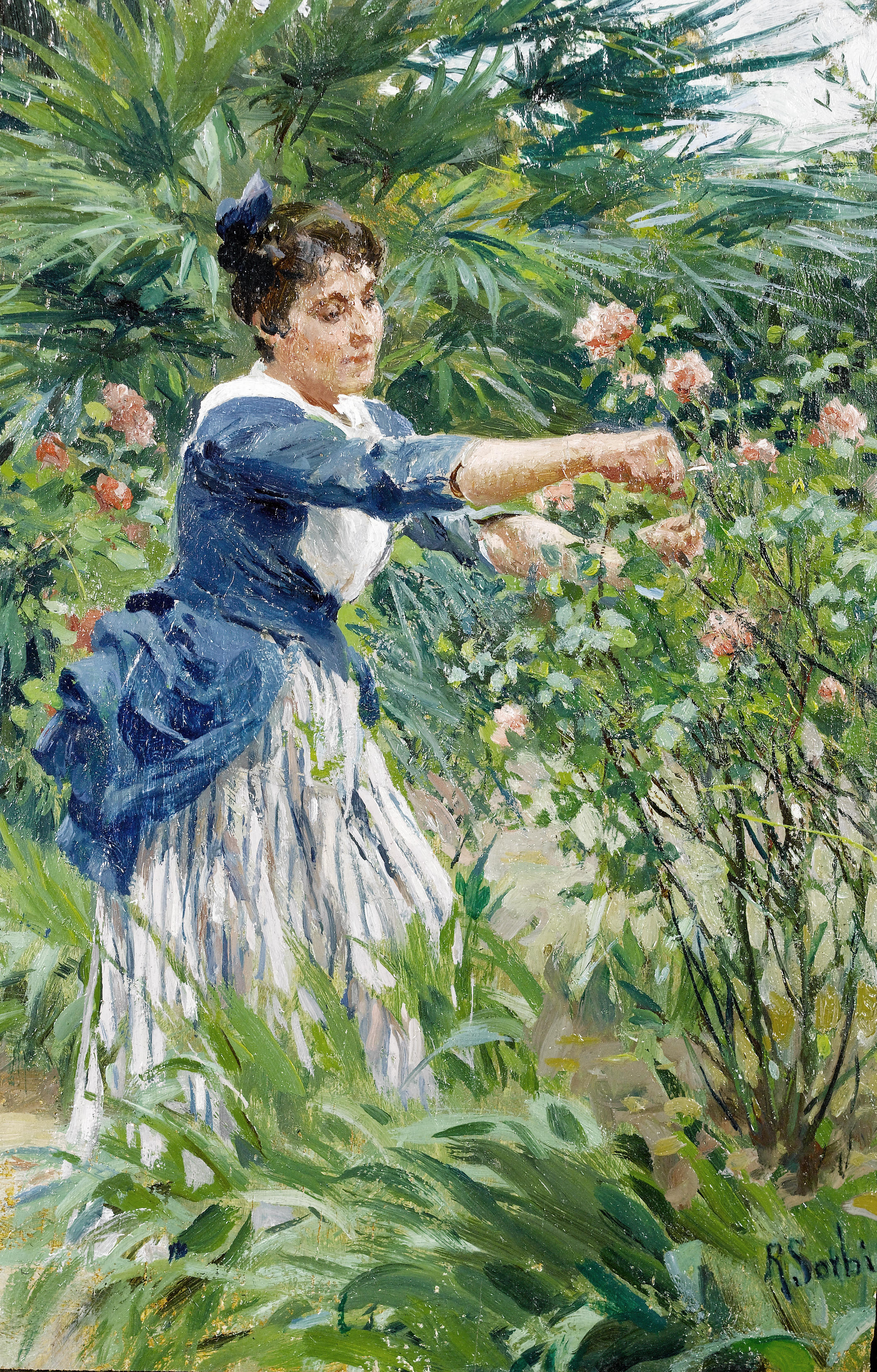
Pruning is one of the most consequential recurring tasks in a private garden, and one that is frequently done at the wrong time or with incorrect technique. The consequences of poor pruning are not always immediate — they show up in the following season as reduced flowering, weak regrowth, or structural damage that compromises the plant for years. This guide covers the main plant categories that require regular pruning in Italian private gardens: roses, fruit trees (with specific attention to apple and olive), and ornamental flowering shrubs.
Why Timing Matters More Than Technique
For most woody plants, the physiological state at the time of pruning determines the outcome far more than the specific cutting angle or tool choice. Pruning at the wrong point in the growth cycle — even with the right tools and clean cuts — will produce inferior results compared to well-timed pruning with basic equipment.
The two main windows for pruning in Italian gardens are winter dormancy (January to mid-February in most of central and northern Italy) and late summer after flowering has concluded. Which window applies depends on the plant's flowering habit: plants that flower on current year's wood are pruned in late winter; plants that flower on previous year's wood are pruned after they finish flowering in late spring or early summer.
Pruning Roses in Italian Gardens
Italy grows roses in considerable variety — climbing roses on pergolas, hybrid tea roses in formal beds, and old garden roses on estate walls. Each type requires a different approach.
Hybrid Tea and Floribunda Roses
These are the roses most commonly found in private Italian gardens. Prune them in late January to mid-February across most of Italy — earlier in the south, later in the north. The objective is to remove all dead, crossing, and weak stems, leaving four to six healthy canes of roughly pencil thickness or larger. Cut each cane back to an outward-facing bud, making a slanted cut about 5mm above the bud. This encourages growth away from the center of the plant, improving air circulation and reducing fungal problems that are common in Italian summers.
A harder cut (leaving canes 20–30cm tall) produces fewer but larger blooms. A lighter cut (leaving canes 40–60cm) produces more numerous, slightly smaller flowers. For most domestic gardens, a moderate cut is appropriate.
Climbing and Rambling Roses
Climbing roses are a staple of Italian walls and pergolas. The correct approach depends on whether the variety is repeat-flowering or once-blooming. For repeat-flowering climbers, prune side shoots back to two or three buds in winter, while keeping the main structural canes intact unless they are very old. For once-blooming ramblers, prune immediately after flowering concludes in June or July — cut out the oldest canes at the base and tie in the new growth that will carry next year's flowers.
Old Garden Roses
Many Italian rural properties have old garden roses that may have gone unpruned for years. These typically require a multi-year renovation rather than a single hard cut. Remove one-third of the oldest wood each winter over three consecutive years. By the third year, the plant will have largely regenerated from younger, more productive canes.
Pruning Fruit Trees
Fruit tree pruning differs substantially from ornamental pruning. The goal is to balance vegetative growth with fruit production — a tree that is growing too vigorously will produce little fruit, while an overly restrained tree may produce fruit but lack the vigor to sustain healthy growth long-term.
Apple and Pear Trees
Prune apple and pear trees during dormancy, between leaf fall in November and bud break in March. In practical terms, most Italian gardeners prune in late January or February. The key structural objective for mature trees is to maintain an open canopy that allows light to penetrate to the interior — dense interior growth shades the fruiting spurs and reduces fruit quality.
Remove:
- Crossing branches that rub against each other
- Vertical water shoots arising from main branches (these rarely fruit and compete for resources)
- Any branches growing into the center of the canopy
- Dead, diseased, or damaged wood
Avoid removing more than one-quarter of the canopy in a single season. The tree responds to heavy pruning by producing vigorous but unfruitful regrowth — the opposite of the desired outcome.
Olive Trees
The olive is the defining tree of the Italian landscape, and its pruning is a topic that generates strong regional opinions. The traditional approach in Tuscany, Umbria, and Puglia is to prune once every two to three years in late winter or early spring, removing enough wood to create a "goblet" shape that admits light to the canopy interior.
Olive trees fruit on the previous year's wood. Pruning too heavily removes the fruiting wood; not pruning allows the canopy to become dense and unproductive. The target is to maintain access to light throughout the crown while preserving the younger two-year-old shoots that will bear the current year's crop.
In the Italian tradition, olive pruning also serves a fire-prevention function — branches and suckers from the base are removed, reducing fuel load in olive groves in fire-prone areas of the south and Sardinia.
"The olive knows when it has been pruned well. It tells you the following November."
Ornamental Shrubs and Hedges
Photinia, Viburnum, and Pittosporum
These three are the most common formal and informal hedge species in Italian private gardens. All three respond well to annual pruning in late spring after their main flush of growth, and again lightly in early autumn. The objective is to maintain shape and density without cutting back into old wood that may not regenerate.
Pittosporum tobira in particular — common on Italian coastal properties — benefits from occasional thinning of old interior wood to prevent the shrub from becoming too woody and open at the base. Do this in spring rather than autumn.
Wisteria
Wisteria on Italian house facades is pruned twice annually. In July or August, cut back the long whippy shoots to four to five leaves from the base. In January or February, cut those same shoots back further to two or three buds. This two-stage process builds up the flowering spur system that produces the familiar chains of flowers in April and May. Skipping either cut results in a mass of green growth at the expense of flowers.
Tools and Their Maintenance
Clean, sharp tools are not an optional refinement — they determine whether cuts heal cleanly or become entry points for disease. The minimum toolkit for Italian garden pruning consists of a bypass secateur (not anvil) for stems up to 15mm, loppers for stems to 40mm, and a folding pruning saw for larger branches.
Wipe blades with a cloth moistened with surgical spirit (alcool isopropilico, available at any Italian farmacia) between plants, particularly when working with rose black spot, fireblight in fruit trees, or any visibly diseased material. This basic practice, often skipped by home gardeners, prevents the transfer of fungal spores and bacterial pathogens between plants.
For information on how soil condition affects the recovery of pruned plants, see the soil and irrigation article. For advice on which plants to include in the garden alongside fruit trees and roses, see the seasonal planting guide.

